
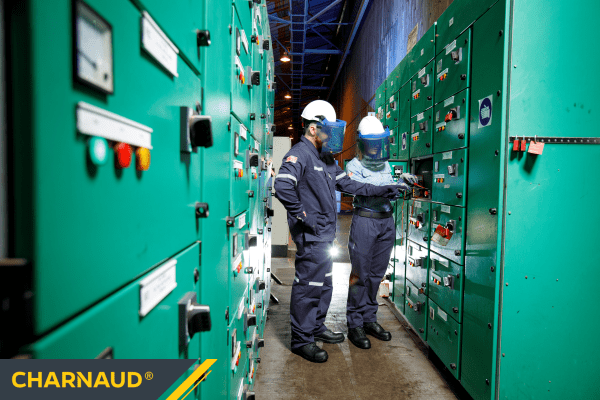
Working with or near electricity presents significant hazards, making adherence to stringent safety standards greatly important. Among these, NFPA 70E: Standard for Electrical Safety in the Workplace works to protect electrical workers from occupational dangers. This aims to help minimise the risk of injuries and fatalities associated with electrical shock and arc flash incidents. It achieves this by establishing comprehensive guidelines encompassing safe work practices, hazard risk assessments and the use of appropriate Personal Protective Equipment (PPE) and clothing (PPC). Companies like CHARNAUD®, through their SURVIVE-ARC® range, exemplify the commitment to producing and supplying fully certified specialised PPE and PPC for electrical workers. By adhering to stringent safety standards, manufacturers ensure that their products offer reliable protection, giving organisations and their employees greater confidence in their safety measures.
Safety Standards Must Match Workplace Practice
Like many safety standards, NFPA 70E is not set in stone, rather it constantly evolves to incorporate advancements in safety knowledge, practice and to address emerging risks. The latest edition (13th Edition) of NFPA 70E includes important updates, particularly in its terminology. For instance, the term ‘shock‘ has been clarified to mean ‘electric shock’ to promote clearer and more consistent understanding across the industry. This seemingly minor change underscores the standards committee’s commitment to enhancing safety and to avoid ambiguity by making sure the smallest details cannot be misinterpreted.
Staying informed about these changes is crucial for several reasons:
- Clearer terminology reduces ambiguity and ensures that all stakeholders, from employers to employees, have a consistent shared understanding that is standardised.
- Precise language in safety standards directly impacts how organisations assess electrical risks. Understanding the nuances of terms like ‘electric shock’ allows for more accurate hazard identification and the selection of appropriate protective measures.
- Adhering to the latest edition of NFPA 70E ensures compliance with current safety regulations and reflects a commitment to best practices in electrical safety – vital for preventing workplace accidents and ensuring the wellbeing of electrical workers.
- Updated terminology and changes to safety standards need to be reflected in safety training programs. When workers are trained using the most current and accurate language, they are better equipped to recognise hazards and implement safe work practices.
Read Next: Top Safety Considerations for PPE in High-Heat Environments
PPE is a Crucial Piece of Workplace Safety
When it comes to mitigating the risks associated with electrical work, the value of certified electrical PPE cannot be overstated. Electrical shock and arc flash events can lead to devastating, life-altering injuries or even death. The PPE worn by electrical personnel acts as the last line of defence against these hazards. At a minimum, clothing worn by electrical workers should be flame resistant (FR) and arc rated (AR). All specialised electrical PPE must be certified according to relevant and current safety standards, such as NFPA 70E.
Safety Certifications Keep Manufacturers Accountable
Safety certifications serve a vital function in the electrical safety landscape. They provide assurance that PPE meets specific performance criteria and will offer the intended level of protection against occupational hazards. This empowers both employers and end-users to make informed decisions about the safety wear and PPE they choose. Without these certifications, the industry would lack a critical framework for ensuring accountability from PPE manufacturers and suppliers.
Partner with CHARNAUD® Today
Staying abreast of changes to safety standards like NFPA 70E is an integral aspect of creating a safer working environment for electrical professionals. Understanding these changes, coupled with the recommended use of high-quality, certified electrical PPE, is a worthy investment in preventing injuries and saving lives.
Now Read: The Heart of a Firefighter: Baigum Abrahams’ Story
