
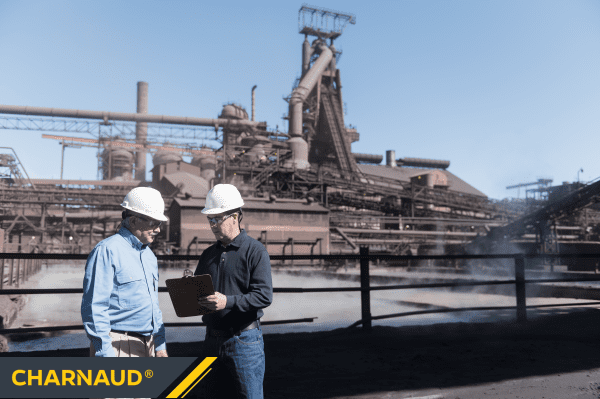
Workplace safety isn’t just a set of rules; it’s a collective commitment. A truly safe environment is created when everyone – from organisational owners and management to employees – actively participates and embraces a safety-first mindset. While some industries inherently carry higher risks, safety measures are crucial across the board. A vital component of these measures is Personal Protective Equipment (PPE), a diverse range of gear tailored to protect individuals from specific workplace hazards. For 50 years, CHARNAUD® has been providing top-tier PPE and invaluable expertise in the role of PPE/PPC in workplace safety. A safe workplace is an issue affecting all within an organisation and that is why it requires organisation-wide input.
Here are some important steps to building a safer workplace:
Understand the Unique Risks
Every job carries its own set of potential dangers. Before undertaking any work, it’s essential to fully comprehend the associated risks. Professions like firefighting and foundry work involve inherent hazards. In such cases, the most effective protection is through following strict safety protocols and the consistent use of appropriate PPE. When evaluating job risks, employees should inquire not only about immediate environmental dangers but also about long-term health risks from exposure to harmful substances and even risks that might extend beyond the workplace.
Read Next: Top Safety Considerations for PPE in High-Heat Environments
Know Your Environment
Being acutely aware of your surroundings is a critical part in reducing the frequency of accidents. This includes knowing the locations of important safety features like fire exits, evacuation routes and muster points, manual fire alarms, fire hose reels and extinguishers. Prompt and decisive action in emergencies can save lives. Environmental awareness also extends to identifying everyday hazards such as tripping points and slippery surfaces, for example. While employers bear the responsibility of creating the safest possible environment, in inherently risky industries, complete hazard elimination might be impossible, making individual awareness even more critical.
Observe – Record – Report – Remediate
Maintaining constant vigilance in your workspace can act as an early warning system against potential dangers. Regularly and methodically observing your surroundings can help identify deviations from the norm that might indicate a problem. Any unusual observations or potential hazards should be promptly reported to the management team. In some roles, periodic recording of specific data is crucial for identifying patterns and predicting potential issues. Accidents, while often unpredictable, frequently result from a combination of factors. When a mishap or accident does occur, effective remediation is vital. This might involve enhancing safety training, improving reporting systems and or implementing more suitable PPE/C to prevent future incidents.
Consistently Follow Established Procedures
Workplace procedures and processes are often implemented to help ensure both safety and maximise efficiency. Procedures are a set of systematic steps designed to achieve specific, safety-related outcomes and could be a range of things like using the correct equipment for tasks like transporting heavy goods to adhering to protocols for specific personnel. Regardless of the specifics, workplace procedures are in place to safeguard employees and should be followed diligently.
Always Dress for the Occupation
In numerous professions, PPE is not just recommended; it’s essential. A firefighter cannot safely enter a burning building without specialised firefighting PPE, and the same is true for many other high-risk occupations. There is absolutely no room for guesswork when it comes to protective clothing. When required, employees must always ‘dress for the occasion’, with fully certified, suitable PPE/PPC. Furthermore, it is crucial to strictly adhere to the advised levels of protection offered by your specific PPE and to ensure that your preferred PPE meets or exceeds the recommended hazard protection levels.
Get in Touch with CHARNAUD® Today
Ultimately, workplace safety is a shared responsibility. While each individual is accountable for adhering to safety procedures, organisational management is equally responsible for providing ongoing and relevant safety training and supplying the correct, fully certified PPE for the specific hazards employees face. PPE is a vital barrier that protects individuals from immediate and potentially life-threatening hazards, making it an indispensable element of workplace safety. The most effective PPE is always fully certified and used for its intended purpose. You can enhance your organisation’s safety efforts by getting in contact CHARNAUD® to explore their extensive range of fully certified personal protective clothing and equipment.
Now Read: The Heart of a Firefighter: Baigum Abrahams’ Story
